
There was clearly an attempt to make a good game here. Crimson Moon’s Unreal Engine-driven environments and its great progression system try their hardest to carry the experience, but the final result keeps getting suffocated by the convoluted story, a limited weapon pool, and a lack of accessibility options. Even when the co-op action starts to click, the lethal camera system and the game’s refusal to prepare you for its own mechanics quickly kill the momentum.
What’s Crimson Moon?

Crimson Moon is an action-adventure RPG centered on bloody, brutal combat against vampires, the undead, and ancient gods. You’ll run into lesser enemies, tough foes, and massive bosses like any action-adventure RPG, but the combat takes heavy inspiration from the soulslike genre, which is known for its difficulty and its emphasis on skillful parrying, dodging, and improvisation. During battle, you can also transform into the Nephilim’s angelic form.
Under the hood it’s a roguelike with co-op features running a soulslike combat system. It has a progression system built around equipment drops, no class system at all, and equipment passives that do the heavy lifting for your build. So yes, it’s a co-op roguelike soulslike. That’s a whole lot of likes.




Playing It Is the Obstacle Between You and a Good Game
Some of the best or most popular soulslikes are defined by their jank. AI LIMIT, for example, had an insanely abusable replacement for its stamina system. Code Vein had partner characters that were probably stronger than you, even if you were the better player. Even FromSoftware’s own games aren’t immune, with some of their quirks becoming almost as iconic as the games themselves, like Bloodborne’s camera occasionally teaming up with your enemies.
But these games aren’t good in spite of their jank either. The jank just becomes part of the experience people remember, for better or worse, adding a particular kind of flavor that makes each game harder to forget. And Crimson Moon, a new co-op roguelike soulslike from developers ProbablyMonsters, seems to understand the assignment… maybe a little too well.
Crimson Moon is a genuinely fun, genuinely deep game that shows up at your doorstep thrown in a garbage bag wrapped in duct tape. It’s incredibly hard to appreciate what it brings to the table when you have to peel away so many issues before you can even get to the good stuff. And by the time you’ve put in enough effort to figure out why it’s worth playing, you might’ve already burned through too much patience to actually enjoy it.
A Simple, Predictable Story
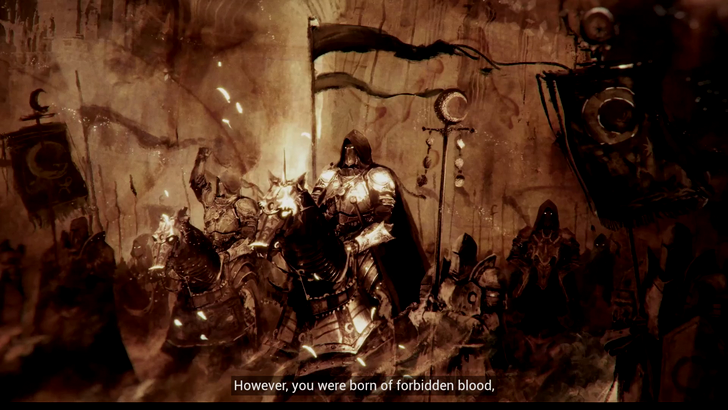
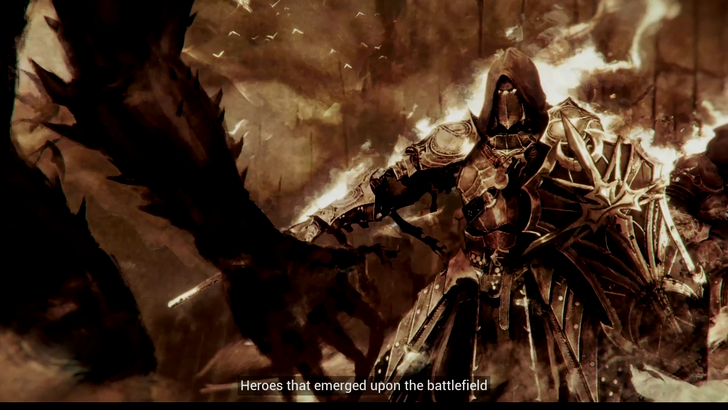
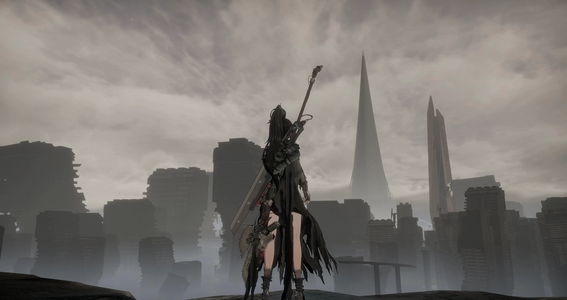
Crimson Moon’s story is pretty straightforward. Long story short, there was a war between good and evil in the past, and things got so bad that humanity was forced into the heresy of mixing with angels. That created the Nephilim: humans born with the explicit, divine protection of angels. But despite winning the previous war, you got chained to the Church because of your forbidden origins, forced to keep fighting against the forces of evil trying to revive their gods.
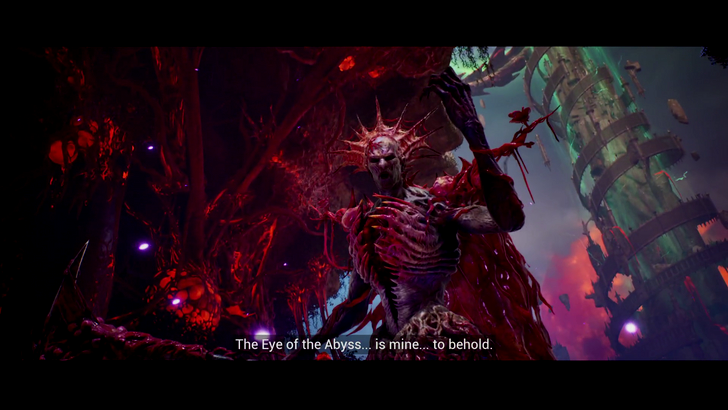
The narrative progression is just as simple. The whole point of your runs is to collect a set of items needed to reach the final boss, and almost everyone else you meet follows the same basic formula. Most get one-dimensional characterizations and barely any screentime beyond a single cutscene. There’s one notable exception, though even that character mostly serves as the game’s recurring antagonist and mastermind.
It’s a shame the story is so shallow, because the premise genuinely sounds fascinating. It’s also somewhat understandable given the structure. Roguelikes naturally fragment their narratives across repeated runs, making it tough to tell a deliberately complex story without risking players losing track of important details between attempts. Crimson Moon could definitely do more with its premise, but asking it to carry a sprawling, intricately developed narrative would probably work against the very structure the rest of the game is built on.
It makes up for that somewhat in terms of worldbuilding, through the sheer volume of lore collectibles scattered throughout the game. It’s certainly one way to address the lack of active storytelling, albeit one that can’t be fully appreciated. After all, Crimson Moon is basically sidestepping the problem entirely and telling players: “You want to learn more? Then go read it yourself.”
Even the ending is the game throwing in the towel. The sequence is nothing but a couple of cutscenes, one of which is just the main antagonist doing the classic “I’m going to monologue about my entire plan and you’re going to stand there and listen” routine, plus an epilogue that wraps everything up with a vague conclusion. I mean, it has to make you expect something more, right? It’s a roguelike, after all.
It’s not the end of the world, though. Crimson Moon clearly understands the limitations its structure puts on storytelling and makes a genuine effort to work around them, especially through its extensive lore. But it never quite figures out how to turn that information into an actively compelling narrative. It’s a valiant effort, for sure, just not one that strays far from what you’d expect from the genre.
The Core Combat Stays Out of Your Way
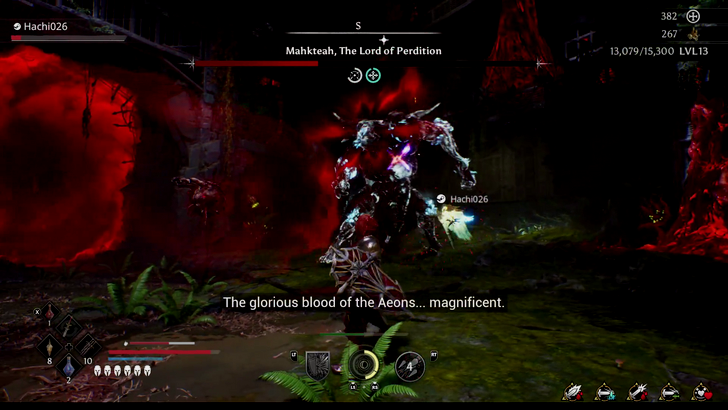
As mentioned, Crimson Moon is a roguelike with a soulslike combat system. Neither half is particularly mind-blowing on its own, but there’s a ton of fun to be had in how they interact with each other in a co-op setting.
The combat being so simple makes it easy for anyone with even a passing familiarity with the genre to jump in. More importantly, the lack of mechanical complexity means you’re not constantly worrying about mastering some elaborate moveset or juggling a dozen combat systems. Instead, your attention naturally drifts toward the things Crimson Moon actually builds its identity around: adapting to roguelike builds and dealing with the beautiful chaos of playing with another human being.
In that sense, the simplicity feels intentional rather than undercooked. By keeping its soulslike foundation nearly friction-free, Crimson Moon funnels players toward the systems that actually matter more to the overall experience, even if those systems aren’t all that deep either.
The Roguelike Progression Is the Real Star
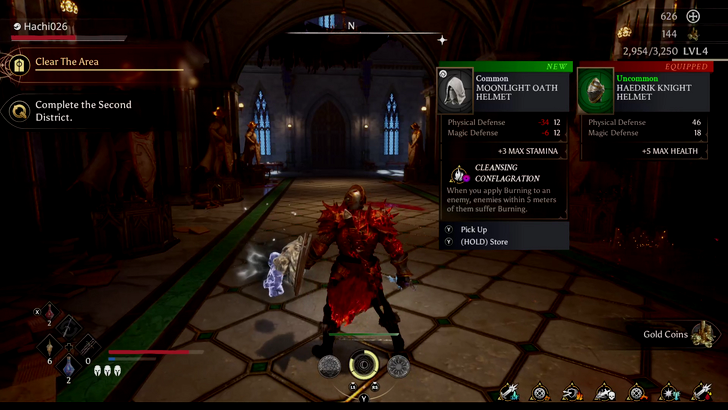
The roguelike elements are, without a doubt, the most essential parts of Crimson Moon. They dictate everything from your weapons and armor to your skills, stats, and, most importantly, cosmetics.
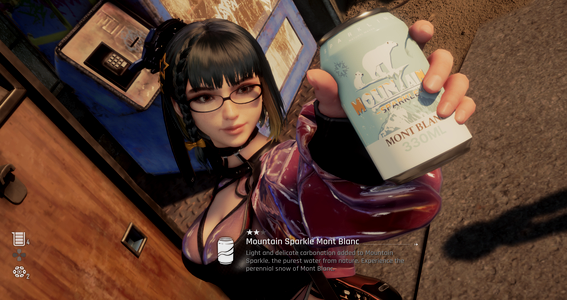
Cleverly, Crimson Moon condenses nearly all of that into a single progression system built around equipment drops. It works by combining every passive, active, and stat-boost effect into properties called Boons, which can randomly spawn on equipment dropped by monsters. Naturally, these Boons come with all kinds of different effects, from burning enemies whose attacks you block, to letting you use magic, to giving you flat HP bonuses.
Keeping progression within a single system makes dealing with new drops remarkably straightforward. If a Boon doesn’t fit your build, ignore it. If it does, grab it. And if you’re willing to diversify or switch builds entirely, you can just make the swap without having to untangle a bunch of interconnected progression systems first.
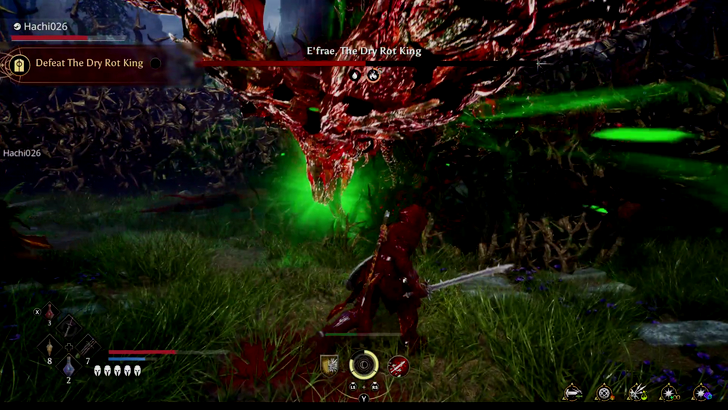
The real charm, though, is how this plays with the fact that Crimson Moon is a co-op game and drops aren’t instanced per player. Every drop can only be claimed by one player. If both of you want the same item, someone has to pass and hope another useful drop shows up later. That might seem like a limitation, and honestly, it’s easy to see why.
But in Crimson Moon’s case, strict role division is tough anyway thanks to the limited weapon selection and massive Boon pool. Shared loot therefore nudges players toward something the game already benefits from: build diversification. Instead of both players independently chasing the same powerful combos, the path of least resistance is often to grab what complements what your partner is already running, or vice versa.
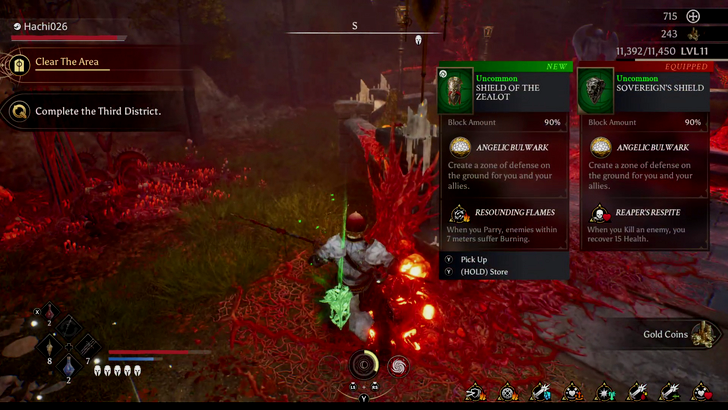
Now you might be thinking: “Wouldn’t instanced loot also let us diversify voluntarily without forcing us to fight over items?” And you’d be right.
The difference is in the mindset shared loot creates. It actively encourages you to pay attention to what your partner is doing, because you’re no longer evaluating every drop solely for yourself. When you find a piece of armor with great Boons, you don’t just ignore it if it doesn’t fit your build. You’re incentivized to check whether it fits your partner’s build instead, and whether it would actually be an upgrade over what they’re currently wearing.
In a co-op game like this, added social layers that pull you deeper into the gameplay are very welcome.
Nobody Bothered to Explain Anything
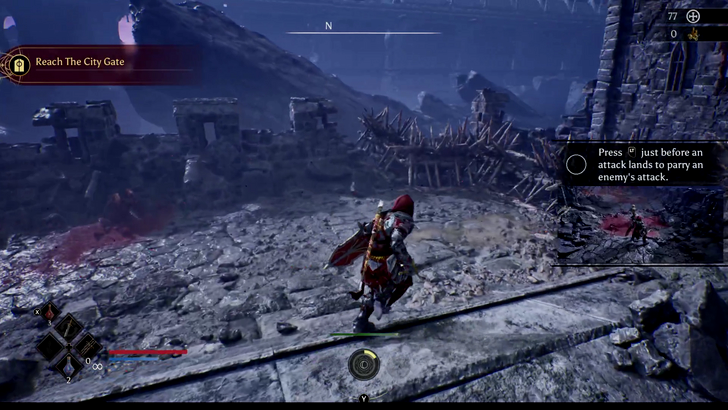
Though Crimson Moon’s emergent cooperative layers are genuinely praiseworthy, there are very real obstacles standing between players and actually discovering them. The first is that practically none of what I’ve described above is properly communicated to the player.
Yeah, you have to figure out almost everything yourself. How equipment loadouts work. How weapons and armor get unlocked. How Boons are retained. How upgrades function. Practically every system tied to Crimson Moon’s meta-progression is completely absent from the tutorial. Don’t get me wrong, there is a tutorial, but it only covers the absolute bare minimum.
Worse, the game gives you almost no prompts or hints to guide you toward systems that are initially confusing but ultimately simple to grasp. That’s especially frustrating because some of Crimson Moon’s most important restrictions only become obvious when it’s already too late to plan around them.
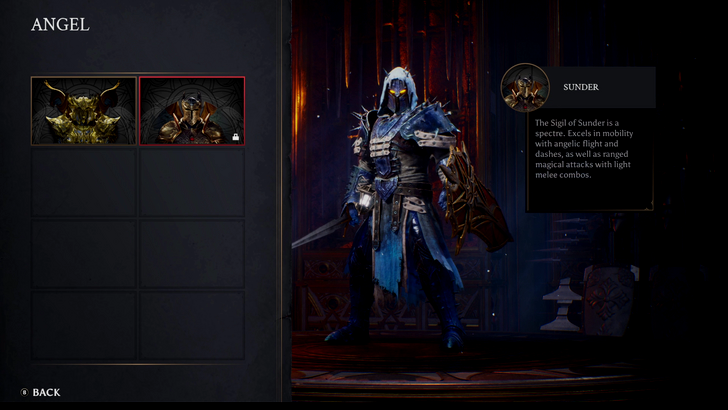
Take loadouts, for example. You can freely swap them before starting a run, but once you’re in one, you’re stuck with it even when moving between areas. Nothing prepares you for this restriction. In fact, the looting system creates the exact opposite expectation. Because you can hold onto equipment during a mission, it naturally suggests that you’ll eventually get a chance to compare that equipment against your other loadouts.
That’s really the core problem with Crimson Moon’s approach to teaching its systems. Discovery is great when players are uncovering interesting interactions, experimenting with builds, or gradually realizing how its cooperative systems complement each other. It becomes way less charming when what you’re discovering is a restriction you wish you’d known about twenty minutes ago.
There Just Aren’t Enough Weapons
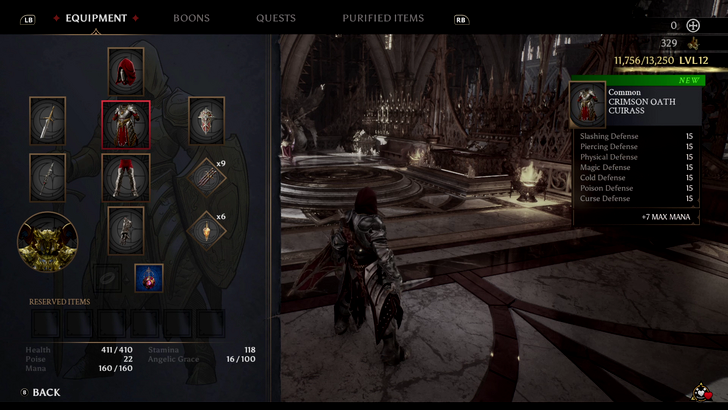
Speaking of loadout limitations, Crimson Moon doesn’t really have much to offer in the weapons and active skills department. There’s really only a handful of one-handed weapons and a few two-handed ones, and none of them differ much in how they affect your gameplay beyond their range.
This is especially noticeable because the Boon system seems perfectly designed to support more distinct playstyles than the game actually allows. Considering that magic exists, for example, it would’ve been awesome to have a staff or something similar that enabled a genuinely dedicated mage build. That alone could’ve opened up way more interesting co-op strategies, letting one player focus on ranged damage while the other built around guarding, parrying, and soaking up enemy attention.
Instead, every weapon being melee means both players are generally forced into the same space and competing for the same enemies. You can still differentiate builds through Boons, of course, but the limited weapon selection keeps those differences from becoming truly distinct combat roles. A guard-focused build is still useful, for example, but it’s way harder to build an actual tank when your supposed damage dealer is standing right next to you and naturally sharing aggro anyway.
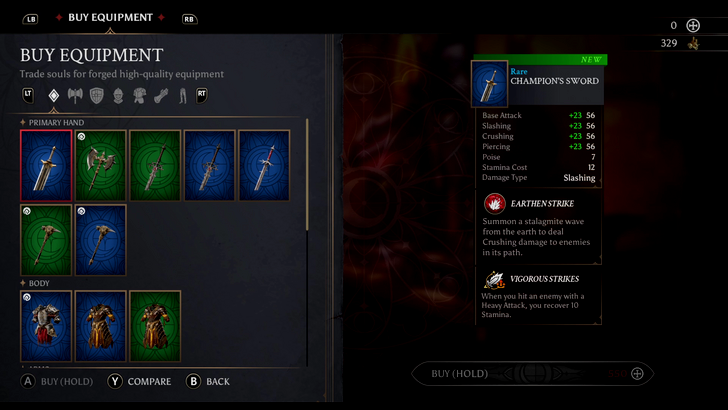
The sheer variety of Boons encourages experimentation and makes it possible to assemble wildly different combinations of effects, but the limited selection of weapons and active skills means those combinations can only diverge so far before they start playing similarly anyway. It creates a weird problem where the progression system feels more flexible than the actual combat system built around it.
It’s not enough to ruin the roguelike progression system, especially because the shared loot gives build diversification an extra cooperative purpose. But it does make you wonder how much more Crimson Moon could’ve gotten out of its own ideas if it just gave players more tools to work with.
The Camera Is One of the Enemies
Lastly, let’s talk about the funniest and most frustrating problem with Crimson Moon: the camera.
For the most part, it works fine. In fact, I’d argue it’s great about 98% of the time. The problem is that the remaining 2% somehow manages to happen at the absolute worst possible moments.
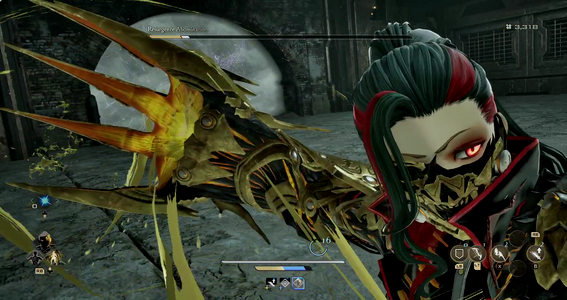
I’m talking specifically about the lock-on mechanic. It’s genuinely weird. When you lock onto an enemy and it suddenly rushes at you, there’s a solid chance the camera will completely lose its mind one way or another. Sometimes it decides to become part of the wall. Sometimes it merges with the ground. Other times it twists your view so violently that you can’t tell up from down. On top of that, for some reason, locking onto an enemy while in melee range forces the camera angle down so much that you lose most of your peripheral vision.
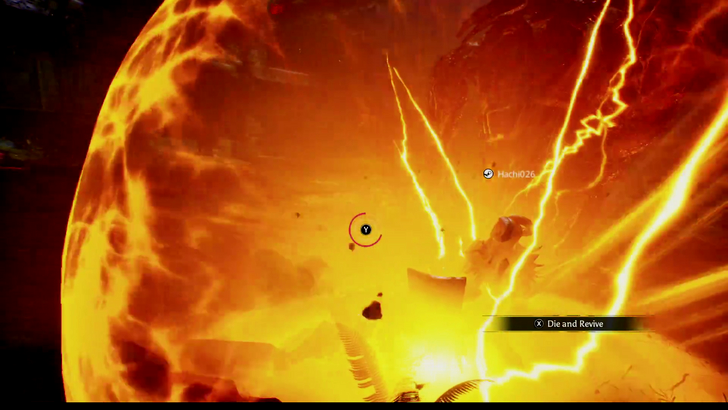
Remember, we’re playing a soulslike here. Losing sight of an enemy for even a split second, or having your peripheral vision suddenly cut off, can easily leave your character face-down on the ground begging for a revive, or at worst cause a full team wipe. The current camera system is an active hazard for anyone trying to play Crimson Moon at a level where every hit taken matters.
The Bottom Line: Wait for a Sale, or a Fix
Despite my complaints, Crimson Moon’s roguelike meta-progression system, which I guess technically makes it a roguelite, is enough to make the journey of beating up every boss genuinely fun. Unfortunately, getting to the point where you can properly appreciate it demands an incredible amount of patience and understanding.
And sadly, that’s enough to make even its relatively cheap price a hard sell. There’s clearly a good game buried underneath all of Crimson Moon’s issues, but I can’t in good conscience recommend asking players to dig through them just to reach it.
So unless the developers address its more obvious problems, and I do think they will, considering that a patch for the baffling lack of key rebinding is already in the works, you’re better off holding off on buying it for now. Until then, Crimson Moon will have to stay on people’s wishlists for a little while longer.




Final Verdict
Crimson Moon delivers a below average experience with a score of 58/100.