
At a Glance
- Fuse Games CEO Matt Webster says Galactic Racer was made by a core team of 75.
- The studio used a three-tier distributed model: outsourcing, external development, and co-development.
- Fuse was founded by ex-Criterion talent (the Need for Speed and Burnout studio).
- The game launched October 6, 2026 on PC, PS5 and Xbox Series X|S with a Metacritic of 88.
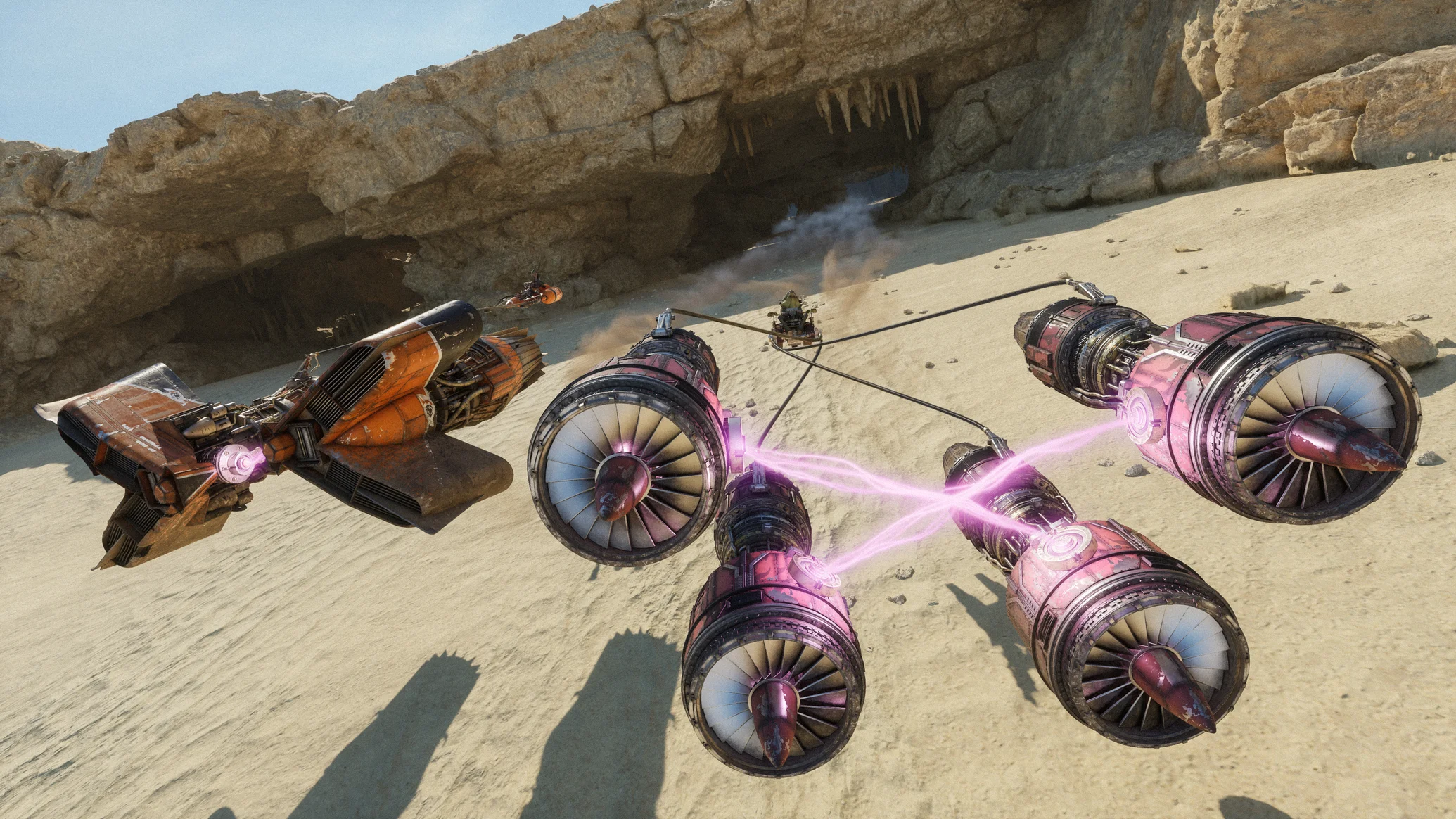
Star Wars: Galactic Racer is a 2026 racing title from Fuse Games, published by Lucasfilm Games and Secret Mode. In a recent interview with GamesIndustry.biz, Fuse CEO Matt Webster offered a striking detail about how small the operation really was: the game was, in his words, “made by a core team of 75.”

A Lean Core, a Wide Net
Webster described a deliberate three-tier structure to keep the in-house team manageable:
- Outsourcing — transactional work such as individual art assets.
- External development — standalone feature modules (a photo mode, for example) handed to external cross-functional teams.
- Co-development — outside studios embedded deeply enough to join daily stand-ups, Slack threads and the shared codebase, effectively extending the core team.
That model let Fuse ship a polished, 88-Metacritic racer without ballooning headcount.
The Criterion Connection
Fuse Games was founded by veterans of Criterion, the studio behind Need for Speed and Burnout — a pedigree that explains why a Star Wars racing game landed with real handling credibility. Webster’s leadership ties directly back to that arcade-racing lineage.
Reading the “75” Carefully
The headline number deserves a footnote. Multiple outlets note that 75 is closer to a peak headcount; the actual core team sat below that for much of development. BBC reporting pegged “around 75” people involved since 2023. Either way, the takeaway is the same: a compact internal team, amplified by a distributed network, delivered a major licensed racer.
Galactic Racer is part of a crowded October. For everything else landing this season, our fall 2026 release calendar stays current.
The Criterion Diaspora
Fuse Games did not appear from nowhere. The studio was founded by veterans of Criterion, the British team behind Burnout and a long run of Need for Speed entries — including Most Wanted and Underground, the games that defined arcade racing for a generation. EA acquired Criterion in 2004, and while the studio kept shipping acclaimed work, the arcade-racing lineage it built has since scattered across the industry. Fuse is one of the clearer through-lines back to that pedigree.
That matters for Galactic Racer specifically. A Star Wars racing game could have been handed to any competent contractor. The reason it landed with real handling credibility is that the people steering it understood what made Burnout feel good to drive — weight, recovery, the rhythm of a corner — not just the licensed IP on the box.
Why a 75-Person Racer Matters in 2026
The headline number is deliberately humbling for an industry addicted to headcount. Major 3A titles routinely credit teams in the hundreds, and studio overhead has become a structural risk: the more people on payroll, the more a game has to earn just to break even. Fuse’s three-tier model — transactional outsourcing, feature-level external development, and deeply embedded co-development — is a workaround for that math.
It is also a risk. Distributed development keeps costs flexible, but it can fracture a game’s coherence if the communication breaks down. Webster’s point is that the model worked here because the co-development tier was close enough to the core to share the codebase and the daily stand-ups, not just the deliverables.
Metacritic 88 and the Racing Renaissance
An 88 on Metacritic is not a trivial score for a racing game in 2026. The genre has quietly recovered from a mid-2010s lull, with Forza, Gran Turismo, and a revived F1 line all proving there is still an audience for cars done well. A licensed Star Wars racer clearing the bar those games set is a stronger result than the brand alone would guarantee.
The score also reframes the “75 people” story. Lean did not mean thin. It meant a small, trusted core amplified by a wide net — and the wide net was good enough that reviewers did not feel the seams.
The Distributed Studio as a Template
Whether Fuse’s model scales beyond a single polished release is the open question. Distributed development is fashionable precisely because it promises leanness, but it demands a discipline most studios underestimate. If Galactic Racer becomes a template rather than an exception, the “75” could age into a rallying cry for a different way of building games.
Seventy-five people for a Metacritic 88 racer is wild. The Criterion DNA really shows in the handling, you can feel the Burnout influence in every corner.
Distributed development is the future if this is the result. Hope more studios copy the co-dev model instead of bloating to 400 heads.