
NVIDIA chief executive Jensen Huang confirmed on November 8, 2026 that he was unfaithful to his wife. He acknowledged a relationship with a person The New York Times had earlier described as a Chinese intelligence asset. NVIDIA’s board has since opened an independent investigation into the national-security implications raised by the reporting. Huang continues to run the world’s most valuable chipmaker while that review runs.
Key Takeaways
- Jensen Huang publicly acknowledged an extramarital affair on November 8, 2026, confirming the broad outline of an October New York Times report (Aftermath, Nov 8, 2026).
- The Times reported Huang had a “close personal relationship” with a person it described as a Chinese intelligence asset, and that Huang was apparently unaware of that person’s alleged role.
- NVIDIA’s board has initiated an independent investigation into the national-security concerns raised by the reporting; Huang says he will cooperate fully.
- Huang remains CEO. No criminal charges against him have been reported, and the company has not announced any leave or leadership change.
- For gamers the immediate impact is indirect: NVIDIA builds the GeForce RTX GPUs and DLSS technology behind much of modern PC gaming, so any governance uncertainty lands on the company’s roadmap rather than on players today.
What The New York Times Reported in October 2026
The episode began as a media report rather than a confession. In October 2026, The New York Times published an investigation suggesting that Huang may have had a “close personal relationship” with a person it described as a Chinese intelligence asset (Aftermath’s summary of the Times report, Nov 8, 2026).
Crucially, the Times also reported that Huang was apparently unaware his partner — described as a fellow technology executive — was an intelligence asset. In other words, the allegation is not that Huang knowingly spied. It is that he was the target of a relationship that, in the paper’s framing, may have been cultivated for access. That distinction is the difference between a personal scandal and a potential espionage case. It is also why the story has drawn counterintelligence interest rather than just tabloid attention.
Huang’s Statement: “I Was Unfaithful to My Wife”
On November 8, 2026, Huang posted a statement on NVIDIA’s website. It acknowledged the affair directly and addressed the national-security angle head-on. The opening lines were personal:
“I owe my family and all of you an apology. I was unfaithful to my wife. My actions hurt her and our children. There is no excuse for what I did. I am deeply sorry.”
Later in the same statement, he turned to the reporting’s national-security claims and the company’s response:
“Regarding the national security concerns raised in news reports, NVIDIA’s Board of Directors has initiated an independent investigation. I support the investigation and will cooperate fully. I love our country and our company. I am committed to protecting NVIDIA and supporting America’s national security. I am proud and grateful to be an American.”
The statement is notable for what it confirms (the affair) and what it does not do (deny the Times’ core reporting about the relationship itself). It frames the national-security question as a matter for the board’s inquiry rather than a personal rebuttal.
The NVIDIA Board’s Independent Investigation
Following the statement, NVIDIA’s board initiated an independent investigation into the national-security concerns raised by the news reports. Huang said the review will be assisted by “external independent lawyers,” and he pledged full cooperation.
This is the corporate-governance core of the story. Kotaku reported the episode under the headline “Nvidia Launches Investigation Into CEO Jensen Huang Following Honeypot Scandal” (Kotaku), corroborating that the company — not just Huang personally — has opened a formal inquiry. Insider Gaming, a games-industry outlet, covered the same thread as a “suspected Chinese spy investigation” (Insider Gaming).
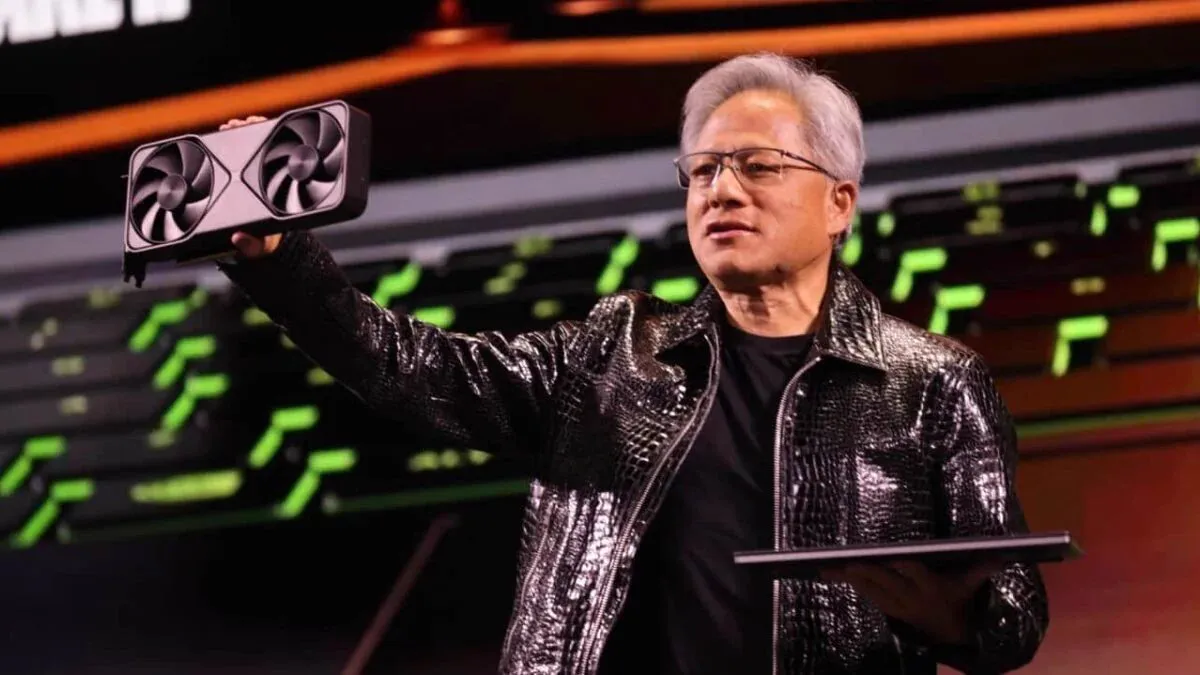
Two points are worth holding onto:
- No charges have been reported. Huang has not been accused of a crime by any prosecutor. The intelligence-asset characterization comes from news reporting, not an indictment.
- Leadership is unchanged. Huang remains CEO, and NVIDIA has not announced a leave of absence or interim leadership. That means day-to-day operations continue while the board’s review runs in parallel.
Why Outlets Called It a “Honeypot” and a Spy Inquiry
The “honeypot” label, used by Kotaku and echoed across coverage, is an intelligence term, not a moral one. A honeypot is an intelligence tactic in which an operative builds a personal or romantic relationship with a target to gain access, influence, or information. Whether that framework ultimately fits the Huang case is exactly what the board’s investigation is meant to determine.
What is safe to say is that the Times’ reporting placed the relationship inside a national-security lens. Huang’s own statement reinforces that seriousness. By naming an independent investigation into “national security concerns,” he acknowledges the weight of the questions without conceding their validity. Until the board or investigators release findings, the spy dimension remains alleged, not established.
What This Means for Gamers and the Gaming Industry
NVIDIA is not just an AI company. It is the dominant supplier of discrete GPUs for PC gaming. GeForce RTX is NVIDIA’s consumer graphics line, and DLSS (Deep Learning Super Sampling) is its AI upscaling technology that has become a standard expectation in modern game development. That makes any leadership uncertainty at NVIDIA relevant to players, even when the scandal itself is personal.
The practical read for gamers right now:
- No immediate product impact. GPU launches, driver releases, and DLSS updates are run by large engineering and product organizations, not by the CEO alone. Nothing in the current reporting suggests a near-term change to GeForce roadmaps or game-developer tooling.
- Roadmap risk is the real variable. NVIDIA’s next-generation GPU architectures, ongoing DLSS iterations, and its broader push into AI-assisted game technologies — such as neural rendering and on-device inference, covered in our AI tools policy roundup — all depend on stable leadership. A prolonged governance distraction could affect long-term planning. For now, though, that is a “watch this space” point rather than a present disruption.
- Game developers are watching. Studios that build on NVIDIA’s SDKs and neural-rendering tools care about the company’s stability because their pipelines increasingly depend on it. Most, however, have multi-year relationships and alternative paths, including AMD and Intel graphics, so dependency risk is manageable.
NVIDIA’s situation also lands inside a broader 2026 tech-industry shake-up, from Microsoft’s voluntary exit program to the year’s studio layoff tracker. That is why investors and developers are reading the board’s inquiry so closely.
For a gaming-news audience, the headline translation is simple: your RTX 5090 is not going anywhere, but the corporate story behind the green team is now more uncertain than it was a week ago.
Market Reaction and the “AI Bubble” Question
NVIDIA sits at the center of the AI-capital spending cycle. That has led some commentators to ask a softer question: could a scandal at the top of the company feed broader nervousness about AI-sector valuations? Aftermath noted viral social posts capturing the mood — including one quip that “the AI bubble is gonna burst because the Nvidia guy cheated on his wife with a spy.” The claim is more joke than analysis.
Treat that framing as commentary, not evidence. There is no verified data in the current reporting linking Huang’s personal life to NVIDIA’s financial performance or to AI-market sentiment. The company’s fundamentals — data-center demand, gaming GPU sales, and supply — are unchanged by the admission itself. The only concrete corporate action so far is the board’s investigation.
Timeline of the Story So Far
- October 2026 — The New York Times publishes a report linking Huang to a person it describes as a Chinese intelligence asset, while noting he was apparently unaware of that person’s alleged role.
- November 8, 2026 — Huang posts a public statement acknowledging the affair and confirming the board’s independent investigation into national-security concerns.
- November 8–9, 2026 — Gaming and tech outlets including Aftermath, Kotaku, and Insider Gaming publish coverage; the story spreads across social platforms.
Frequently Asked Questions
Did Jensen Huang resign or step down from NVIDIA?
No. As of November 9, 2026, Huang remains NVIDIA’s chief executive. The company has not announced a leave of absence or interim leadership, and Huang’s statement says he is “fully committed to NVIDIA.”
What is a “honeypot” in this context?
In intelligence work, a honeypot is a tactic where an operative forms a personal or romantic relationship with a target to gain access or information. Outlets have used the term to describe the Times’ framing of the relationship. It remains an allegation under investigation, not a proven fact.
Has Huang been charged with a crime?
No criminal charges against Huang have been reported. The intelligence-asset description comes from news reporting, and Huang has not been indicted. The board’s inquiry is an internal, corporate investigation.
How does this affect NVIDIA GPUs or PC gamers?
Indirectly, at most. GeForce RTX GPUs, drivers, and DLSS are managed by NVIDIA’s engineering and product teams, and nothing in the reporting points to near-term changes for gamers. The main thing to watch is long-term roadmap stability, not current product availability.
Reporting Note
This article summarizes allegations and statements reported by The New York Times, Aftermath, Kotaku, and Insider Gaming as of November 9, 2026. The intelligence-asset characterization originates in news reporting and has not been confirmed by any court or prosecutor. Where the text says “alleged” or “reported,” that is intentional. Huang’s quoted words are taken from his November 8, 2026 statement published on NVIDIA’s site.
The GPU roadmap is what I am watching. GeForce RTX and DLSS updates are run by the engineering teams, so my 5090 is safe, but long-term neural rendering plans depend on stable NVIDIA leadership.
Worth separating the personal from the national-security part. Huang admitted the affair, but the spy framing is still an allegation under the board's investigation, not a charge.
The 'honeypot' label is doing a lot of work in headlines. Until the independent investigation releases findings, gamers should treat the AI-bubble panic as commentary rather than fact.